
 Image 1 of 4
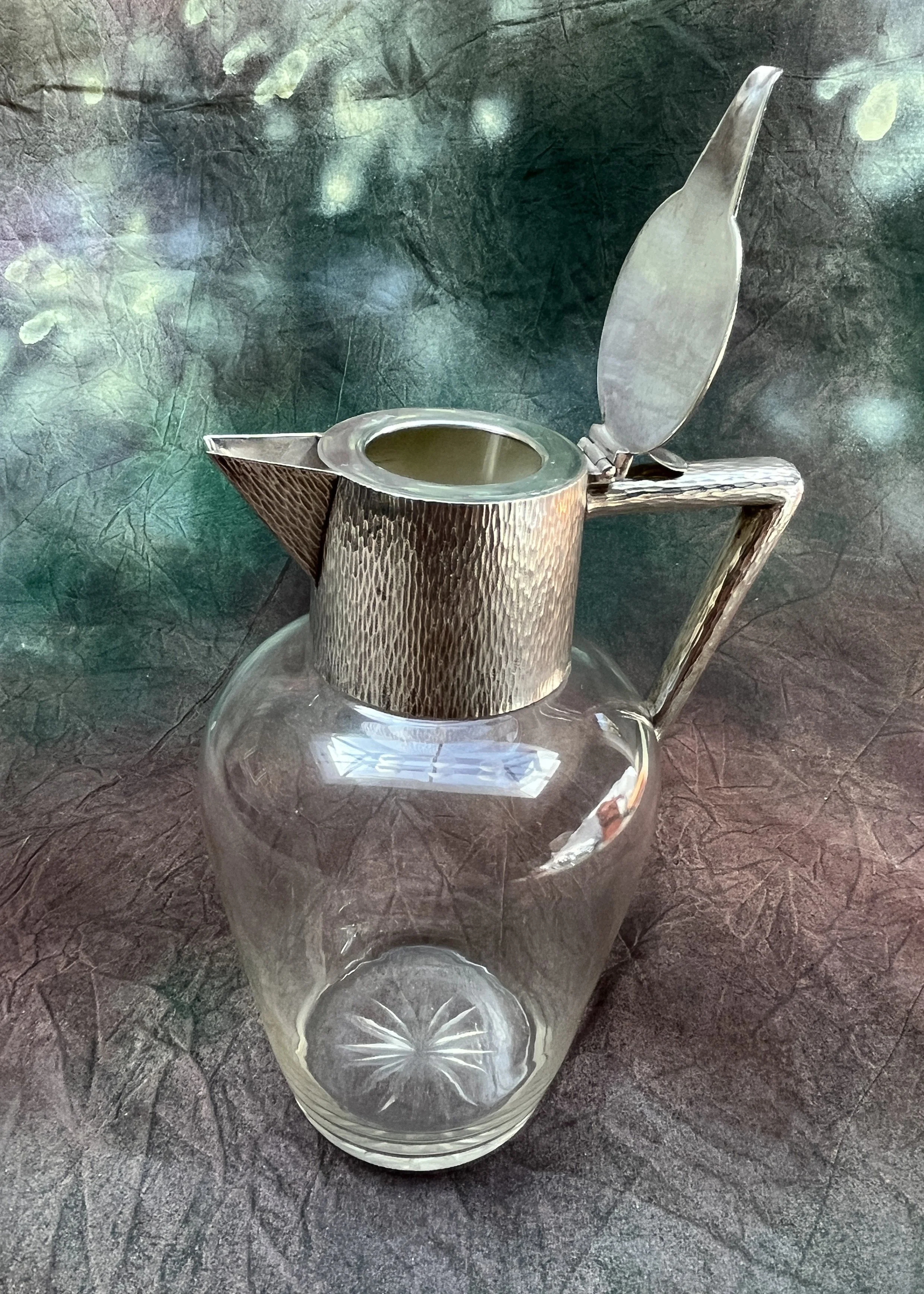 Image 2 of 4
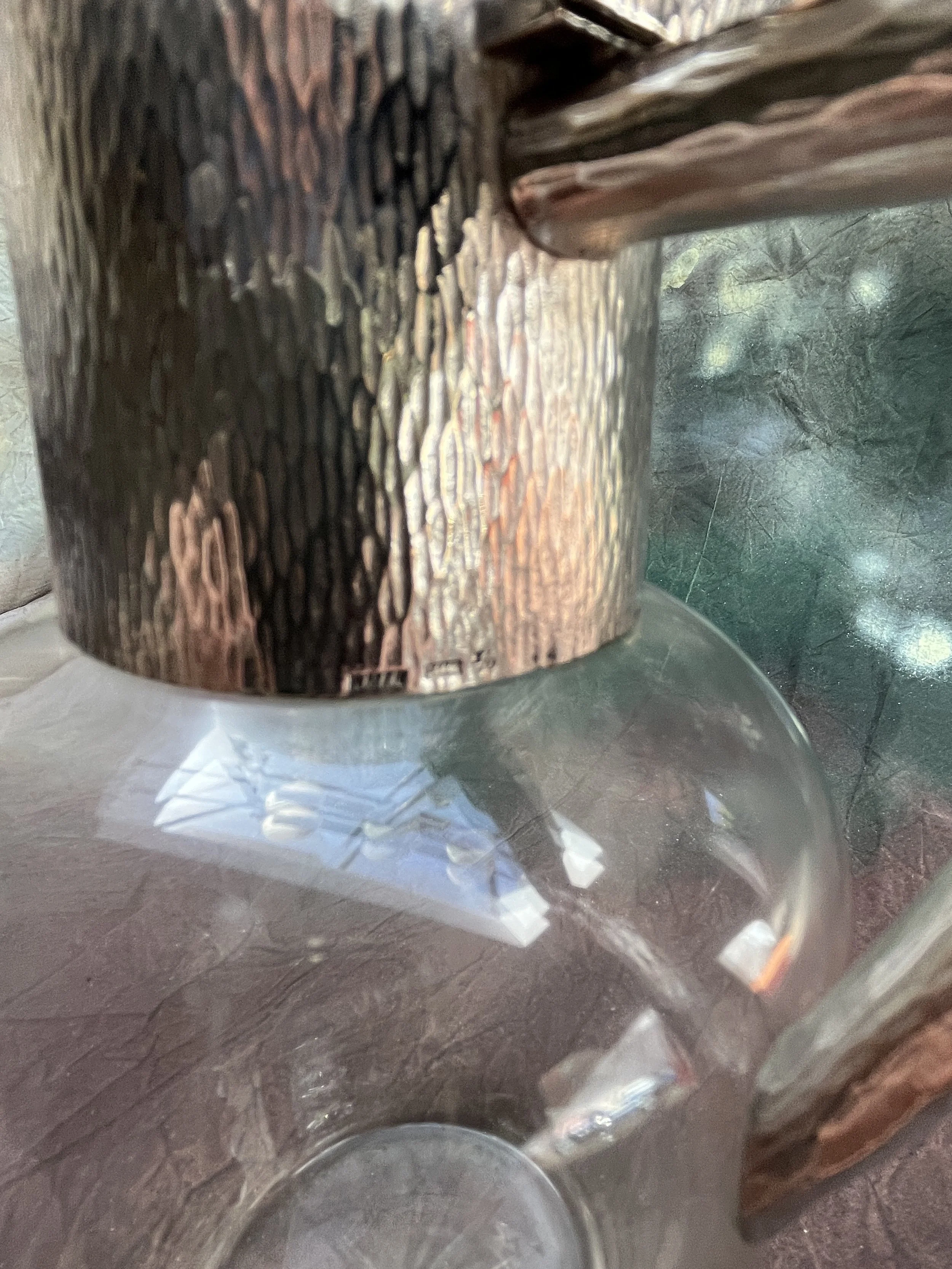 Image 3 of 4
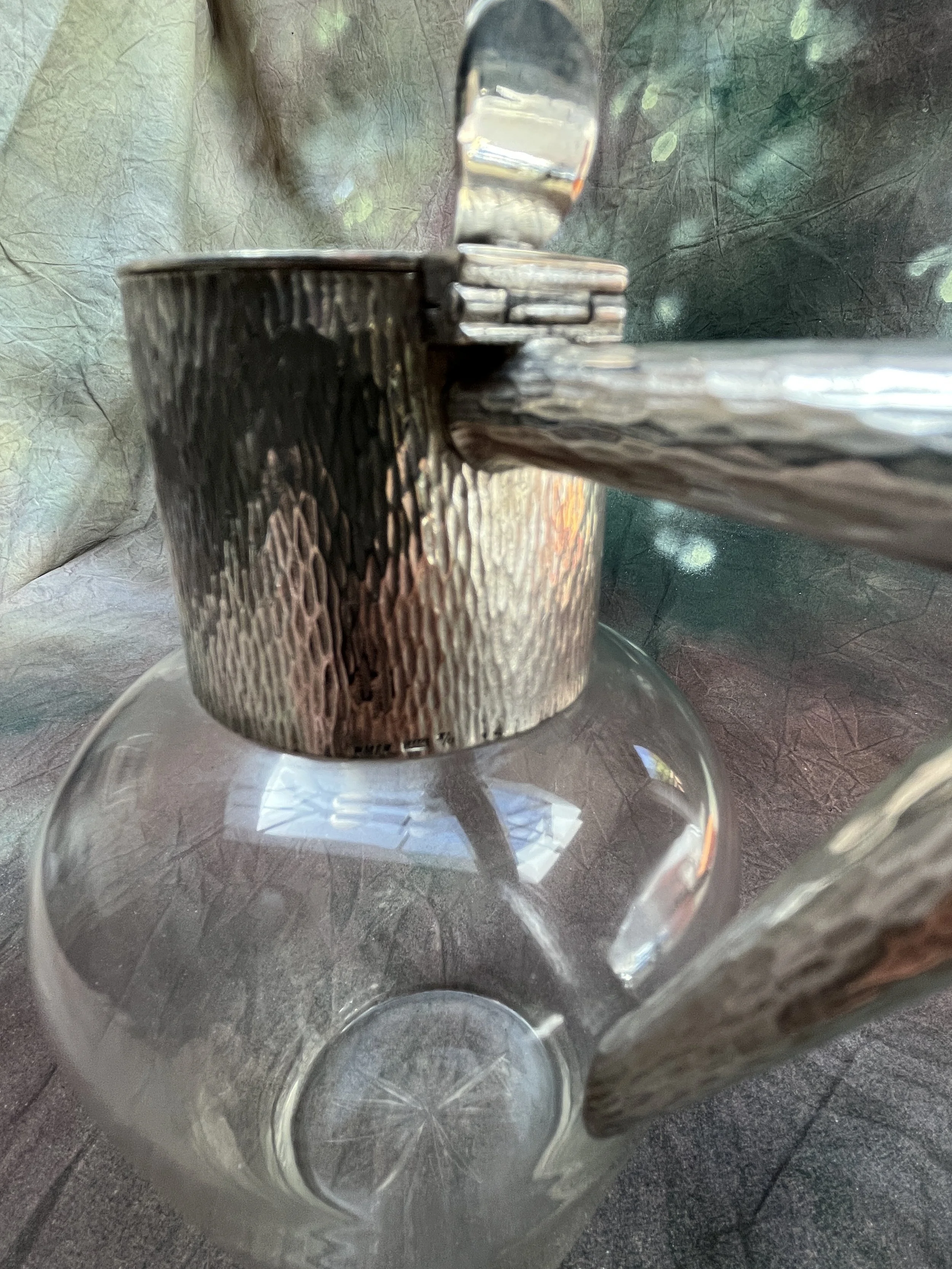 Image 4 of 4
Germany, Circa 1900
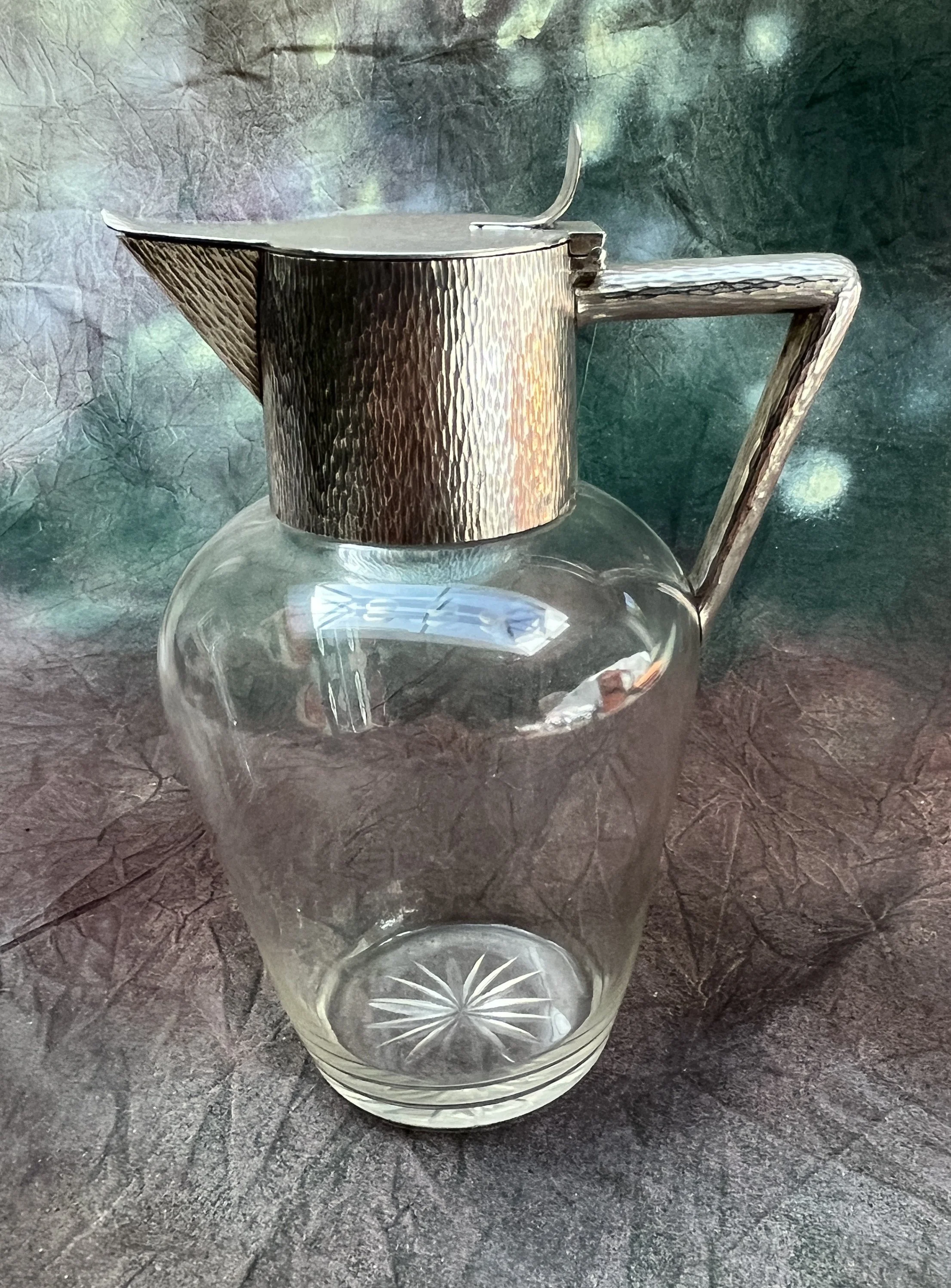
A finely proportioned electro‑silver claret jug by WMF, its tapered body and architectural handle exemplifying the firm’s refined modernist aesthetic of the interwar period. The surface retains its original plating with only light, natural wear, presenting in excellent, undisturbed condition.
WMF—originating as Metallwarenfabrik Straub & Schweizer and by 1900 the world’s leading metalware manufacturer—produced some of the most sophisticated domestic silvered wares of the era. This elegant jug is a particularly strong example of their 1900’s output, combining precision engineering with a restrained, sculptural silhouette.
The Hallmark date seem to indicate this is around the early 1900’s The letter "N" is the sign for Neusilber (Alpacca), used as a base metal for silvering. A very nicely proportioned jug, with a lovely finish to the handle and lid.
Germany, Circa 1900
A finely proportioned electro‑silver claret jug by WMF, its tapered body and architectural handle exemplifying the firm’s refined modernist aesthetic of the interwar period. The surface retains its original plating with only light, natural wear, presenting in excellent, undisturbed condition.
WMF—originating as Metallwarenfabrik Straub & Schweizer and by 1900 the world’s leading metalware manufacturer—produced some of the most sophisticated domestic silvered wares of the era. This elegant jug is a particularly strong example of their 1900’s output, combining precision engineering with a restrained, sculptural silhouette.
The Hallmark date seem to indicate this is around the early 1900’s The letter "N" is the sign for Neusilber (Alpacca), used as a base metal for silvering. A very nicely proportioned jug, with a lovely finish to the handle and lid.